
Dental Implant Placement in Geneva, IL
Dental implant placement is the surgical process of positioning a small titanium post in the jawbone to replace a missing tooth root. The implant can later support a crown, bridge, or implant-supported denture after it has achieved sufficient stability.
At Illinois Oral & Maxillofacial Surgery, Kevin R. Haddle, MD, DDS, performs dental implant surgery for patients from Geneva, St. Charles, Batavia, and surrounding Fox Valley communities. His dental, medical, surgical, and anesthesia training supports comprehensive planning and precise implant placement.
Quick Answer: How Are Dental Implants Placed?
During dental implant surgery, Dr. Kevin Haddle numbs the treatment area, prepares a precise space in the jawbone, and positions a titanium implant that will support a replacement tooth. The implant then heals and integrates with the surrounding bone before the restorative dentist places the final crown, bridge, or denture.
How Is Dental Implant Surgery Planned?
Implant treatment begins with a consultation, health-history review, oral examination, and diagnostic imaging. Dr. Haddle evaluates the missing-tooth site and coordinates with the restorative dentist to ensure the proposed implant position supports the planned replacement tooth.
When clinically appropriate, 3D cone beam CT imaging can provide detailed information about:
- The height, width, and density of the jawbone
- The position of nearby tooth roots
- The location of nerves in the lower jaw
- The size and position of the maxillary sinuses
- The angle and dimensions of the proposed implant site
- Whether bone grafting or another preparatory procedure may be necessary
The treatment plan also considers the number of missing teeth, gum health, medical conditions, medications, tobacco or nicotine use, and the design of the final restoration.
What Happens During Dental Implant Placement?
The time required for implant surgery varies according to the number and location of implants, whether an extraction or bone graft is performed, the available bone, and the complexity of the case. A single straightforward implant may take less time than multiple implants or a procedure involving site reconstruction.
Dental implant placement generally includes the following steps:
- Anesthesia: Local anesthesia is administered to numb the surgical area. Additional sedation or anesthesia may be available based on the procedure, health history, and patient comfort needs.
- Accessing the implant site: Dr. Haddle creates a small opening in the gum tissue to access the underlying jawbone.
- Preparing the bone: Specialized instruments are used to create a carefully measured space for the implant.
- Placing the implant: The titanium implant is positioned at the planned depth and angle.
- Protecting the site: A healing component may be attached, or the implant may be covered by gum tissue during the initial healing period.
- Monitoring healing: Follow-up appointments allow Dr. Haddle to evaluate the surgical site and implant stability.
Depending on the treatment plan, a tooth extraction, bone graft, or soft-tissue procedure may be completed before or during implant placement.
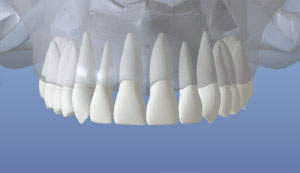
1. Natural Tooth
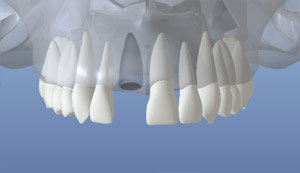
2. Tooth Loss
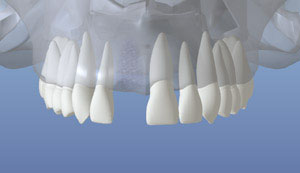
3. Implant Site Heals
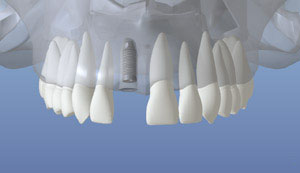
4. Implant Placed
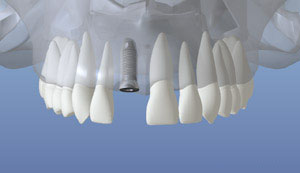
5. Implant Integrates
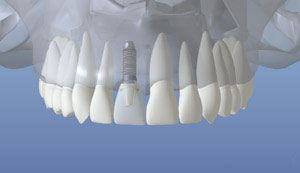
6. Implant Restored
What Is Osseointegration?
Osseointegration is the biological process through which living bone heals around and connects with the surface of a dental implant. This process helps establish the stability needed for the implant to support a replacement tooth.
The amount of time required varies among patients and treatment sites. Bone quality, implant stability, grafting, medical health, tobacco use, oral hygiene, and biting forces can all affect healing.
What Happens During Healing After Dental Implant Surgery?
Temporary swelling, soreness, bruising, or minor bleeding may occur after implant placement. Patients receive postoperative instructions based on the procedure performed and should attend scheduled follow-up visits so Dr. Haddle can monitor healing.
During the healing period:
- The jawbone begins integrating with the implant.
- The gum tissue heals around a healing cap or over the covered implant.
- The patient may use an appropriate temporary tooth or prosthesis.
- The surgical and restorative providers monitor the implant before final restoration.
- The patient follows cleaning and dietary instructions designed for the procedure.
More detailed information about temporary teeth, implant maintenance, potential concerns, and the restorative phase is available in our after implant placement FAQ.
Will the Implant Be Visible While It Heals?
Implants can heal using either a one-stage or two-stage approach.
One-Stage Implant Placement
A healing component remains visible above the gum while the implant integrates. If appropriate, this can eliminate a separate procedure to uncover the implant.
Two-Stage Implant Placement
The implant is covered by gum tissue during healing. After adequate integration, a brief follow-up procedure exposes the implant and allows a healing cap or abutment to be attached.
The recommended approach depends on implant stability, bone and gum conditions, grafting, implant location, and the restorative plan.
What Is an Abutment?
An abutment is the connector between the implant and the visible replacement tooth. Depending on the implant system and treatment plan, a healing cap or abutment may be placed during the original surgery or at a later appointment.
After the gum tissue has matured and the implant is ready for restoration, the restorative dentist uses impressions or digital records to create the final crown, bridge, or denture.
Who Places the Final Implant Crown?
Dental implant treatment is usually a coordinated process:
- Dr. Haddle performs the surgical evaluation, necessary extraction or bone grafting, implant placement, and surgical follow-up.
- The restorative dentist designs and places the temporary and final crown, bridge, or denture.
- The patient follows postoperative instructions, maintains oral hygiene, and attends surgical and restorative appointments.
Coordinating the surgical and restorative phases helps ensure that the implant is positioned to support the final replacement tooth.
Dental Implants Presentation
To provide you with a better understanding of dental implants, we have provided the following multimedia presentation. Many common questions pertaining to dental implants are discussed.

When Can a Dental Implant Be Placed?
The timing of implant placement depends on the condition of the tooth, extraction site, gum tissue, and surrounding bone. Common treatment sequences include:
Immediate Implant Placement
In an appropriate case, an implant may be placed during the same appointment as the tooth extraction. This approach requires adequate bone for initial implant stability and may not be recommended when infection, significant bone loss, or unfavorable anatomy is present.
Early Implant Placement
An implant may be placed after the gum tissue and extraction site have had an initial period of healing. This can provide time for inflammation or infection to resolve while limiting prolonged changes to the ridge.
Delayed Implant Placement
The extraction site may be allowed to heal more completely before implant surgery. Delayed placement may be appropriate when bone grafting, infection management, or additional site development is necessary.
Earlier evaluation can help preserve treatment options. If a tooth needs to be removed, Dr. Haddle can determine whether socket preservation or immediate implant placement should be considered.
Can an Implant and Temporary Tooth Be Placed the Same Day?
Some implants can support a temporary restoration on or shortly after the day of surgery. This is sometimes called immediate loading or immediate provisionalization.
Same-day temporary teeth are not appropriate for every patient. The decision depends on:
- The implant’s initial stability
- Bone quality and quantity
- The location of the implant
- The number and distribution of implants
- Biting and grinding forces
- The presence of infection or bone loss
- The patient’s ability to follow dietary restrictions
A same-day tooth is often temporary. The definitive restoration is generally created after healing and any necessary tissue changes have occurred.
Will I Need Bone Grafting Before Implant Placement?
A dental implant requires sufficient healthy bone for support. If the tooth has been missing for an extended period, the ridge may have narrowed or decreased in height. Bone loss can also result from infection, gum disease, trauma, or the anatomy of the upper jaw near the sinus.
Depending on the site, bone grafting for implants may be performed:
- At the time of tooth extraction
- As a separate procedure before implant placement
- At the same appointment as implant placement
- As part of a sinus lift in the back of the upper jaw
The type and timing of grafting depend on the extent of bone loss and whether enough natural bone remains to stabilize the implant.
Will I Need a Soft-Tissue Graft?
Some patients may benefit from a soft-tissue graft to increase the amount or quality of gum tissue around an implant. Adequate tissue can help protect the area, support a natural appearance, and make the restoration easier to clean.
A soft-tissue graft may be performed before, during, or after implant placement. It is not required for every implant site.
How Many Dental Implants Will I Need?
The number of implants does not always equal the number of missing teeth. The recommendation depends on the number and location of missing teeth, available bone, biting forces, and the type of restoration.
- One missing tooth: Often replaced with one implant and one crown
- Several adjacent teeth: May be replaced with an implant-supported bridge using fewer implants than missing teeth
- All teeth in one arch: May be restored with multiple implants supporting a removable or fixed full-arch prosthesis
Patients with extensive tooth loss can learn more about replacing all upper or lower teeth and implant-supported overdentures.
What Can Affect the Dental Implant Timeline?
The total treatment timeline can be influenced by:
- The number and location of implants
- Whether teeth must first be removed
- The need for socket preservation or bone grafting
- Implant stability at the time of surgery
- The patient’s bone quality and healing response
- Gum health and soft-tissue procedures
- The type of temporary and final restoration
- Medical conditions, medications, and tobacco use
- The restorative dentist’s treatment sequence
Because every implant site is different, a personalized timeline is provided after the examination and imaging have been completed.
Why Choose an Oral and Maxillofacial Surgeon for Implant Placement?
Oral and maxillofacial surgeons complete hospital-based surgical and anesthesia training after dental school. Their training includes procedures involving the teeth, jawbone, gum tissue, facial structures, nerves, and maxillary sinuses.
Dr. Kevin Haddle earned both DDS and MD degrees and is dual board-certified by the American Board of Oral and Maxillofacial Surgery and the American Board of Cosmetic Surgery. His background supports implant placement, tooth extraction, bone grafting, anesthesia care, and management of complex surgical considerations.
Frequently Asked Questions About Dental Implant Placement
Is dental implant placement painful?
Local anesthesia is used to numb the treatment site, and additional sedation or anesthesia may be available. Temporary soreness and swelling can occur afterward, but patients receive postoperative instructions for managing their recovery.
How long does dental implant surgery take?
The surgical time varies. A straightforward single implant usually requires less time than multiple implants or a procedure involving extraction, grafting, or more complex anatomy. Dr. Haddle can provide a more individualized estimate after treatment planning.
How long does a dental implant take to heal?
Healing time depends on implant stability, bone quality, grafting, implant location, medical health, and other patient-specific factors. The implant must achieve sufficient stability before supporting the final restoration.
Can I work after dental implant surgery?
Some patients return to routine activities relatively quickly, while others need additional recovery time. The appropriate schedule depends on the extent of surgery, anesthesia used, type of work, and individual healing response.
Can dental implants fail to integrate?
Yes. Although implant treatment is generally predictable, an implant may not integrate or may lose stability. Infection, insufficient bone, tobacco use, uncontrolled medical conditions, excessive biting forces, and other factors can affect healing.
When will I receive my final implant crown?
The final crown is placed after Dr. Haddle and the restorative dentist determine that the implant and surrounding tissues are ready. The timing varies according to healing, implant stability, and the restorative plan.
Explore Related Dental Implant Resources
- Dental Implants in Geneva, IL
- Compare Tooth Replacement Options
- Bone Grafting for Dental Implants
- Replacing All Upper or Lower Teeth
- Implant-Supported Overdentures
- After Implant Placement FAQ
- Cost of Dental Implants
Schedule a Dental Implant Consultation in Geneva
Illinois Oral & Maxillofacial Surgery provides dental implant planning and placement for patients from Geneva, St. Charles, Batavia, Aurora, North Aurora, Campton Hills, Elburn, South Elgin, Sugar Grove, Wayne, West Chicago, and surrounding Fox Valley communities.
Call the Geneva office at 630-232-9090 or request an appointment online to schedule a dental implant consultation with Dr. Haddle.
