
Dental Implants in Geneva, IL
Dental implants provide a stable, long-term way to replace one tooth, several teeth, or an entire arch of missing teeth. At Illinois Oral & Maxillofacial Surgery, Kevin R. Haddle, MD, DDS, provides dental implant surgery for patients in Geneva, St. Charles, Batavia, and communities throughout the Fox Valley.
As a dual board-certified oral and maxillofacial and cosmetic surgeon, Dr. Haddle combines dental, medical, surgical, and anesthesia training when planning implant placement. He works with each patient’s restorative dentist to coordinate the surgical and restorative phases of treatment.
Quick Answer: Dental Implants in Geneva, IL
Dental implants are small titanium posts placed in the jawbone to replace missing tooth roots. Dr. Kevin Haddle performs the implant surgery, including necessary tooth extractions and bone grafting, while the patient’s restorative dentist creates the final crown, bridge, or implant-supported denture.
What Are Dental Implants?
A natural tooth consists of a root and a crown. The root sits beneath the gum and holds the tooth securely in the jaw, while the crown is the visible portion used for biting and chewing.
A dental implant replaces the missing root with a small biocompatible titanium post. After the implant is placed, the surrounding bone heals and integrates with its surface through a process called osseointegration. This creates a stable foundation for an implant-supported replacement tooth.
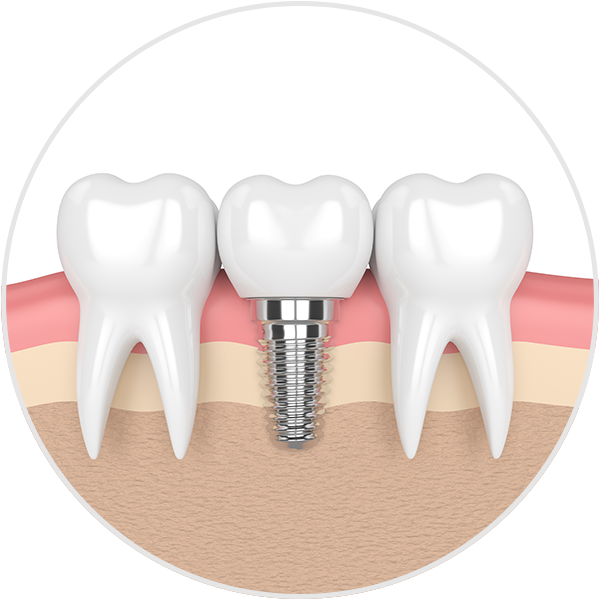
A complete implant-supported tooth typically has three components:
- Dental implant: The titanium post placed in the jawbone
- Abutment: The connector attached to the implant
- Restoration: The visible crown, bridge, or denture created by the restorative dentist
What Can Dental Implants Replace?
Dental implants can support several types of tooth replacement. The appropriate option depends on the number and location of missing teeth, available jawbone, oral health, and the patient’s restorative goals.
One Missing Tooth
A single dental implant can support an individual crown without requiring the neighboring teeth to be reshaped for a traditional bridge.
Several Missing Teeth
Two or more implants may support an implant bridge that replaces multiple adjacent teeth. The number of implants required depends on the location of the missing teeth, biting forces, bone availability, and planned restoration.
All Upper or Lower Teeth
Patients who are missing all their upper or lower teeth may have several implant-based options. These can include removable implant-retained dentures and fixed full-arch restorations.
Loose or Unstable Dentures
An implant-supported overdenture attaches to dental implants for greater stability than a conventional removable denture. The restoration remains removable for cleaning, but its implant attachments help reduce movement while speaking and chewing.
What Are the Benefits of Dental Implants?
Dental implants are designed to function as a stable foundation for replacement teeth. Depending on the patient’s condition and restoration, potential benefits may include:
- Replacing teeth without relying on adjacent healthy teeth for support
- Improving the stability of a crown, bridge, or denture
- Restoring more comfortable biting and chewing
- Supporting natural-looking replacement teeth
- Helping maintain jawbone in the area of the implant
- Providing a removable or fixed solution for extensive tooth loss
- Supporting long-term oral function when properly maintained
Patients comparing implants with bridges, partial dentures, or conventional dentures can learn more on our tooth replacement options page.
Who Is a Candidate for Dental Implants?
Many adults who are missing one or more teeth may be candidates for dental implants. The most important considerations are the health of the mouth, the amount and quality of available bone, the patient’s medical history, and the ability to maintain the implant after treatment.
Factors evaluated during an implant consultation may include:
- The number and location of missing teeth
- The condition of the remaining teeth and gums
- Jawbone height, width, and density
- History of periodontal disease or dental infection
- Tobacco or nicotine use
- Diabetes and other conditions that can affect healing
- Previous radiation treatment involving the jaws
- The type of final crown, bridge, or denture being planned
Age alone does not determine whether someone can receive an implant. Each patient requires an individualized surgical and restorative evaluation.
How Are Dental Implants Planned?
Implant planning begins with a consultation, oral examination, health-history review, and diagnostic imaging. When clinically appropriate, cone beam CT imaging can provide three-dimensional information about the jawbone, nearby tooth roots, nerves, and sinus anatomy.
Dr. Haddle uses this information to evaluate:
- The optimal position and angle for each implant
- The dimensions and quality of the available jawbone
- The relationship between the implant site and nearby anatomy
- Whether a tooth extraction or bone graft is necessary
- Whether immediate or delayed implant placement may be appropriate
- The surgical requirements of the planned restoration
What Happens During Dental Implant Treatment?
The complete dental implant process varies by patient, but it generally includes the following stages:
- Consultation and planning: Dr. Haddle evaluates the implant site, medical history, imaging, and restorative plan.
- Site preparation: A damaged tooth may need to be removed, and bone grafting may be performed when additional support is necessary.
- Implant placement: The titanium implant is surgically positioned in the jawbone.
- Healing and integration: The surrounding bone heals around the implant to establish stability.
- Abutment and restorative treatment: Once the implant is ready, the restorative dentist creates and places the crown, bridge, or denture.
- Maintenance: Ongoing home care and professional dental visits help protect the implant and surrounding tissues.
Visit our dental implant placement page for a more detailed explanation of the surgical procedure, healing stages, and restorative timeline.
Can a Dental Implant Be Placed at the Time of Extraction?
In selected cases, an implant can be placed immediately after a tooth is removed. Immediate placement may reduce the number of surgical appointments, but it is not appropriate for every extraction site.
The decision depends on the available bone, implant stability, location of the tooth, presence of infection, condition of the gum tissue, and planned restoration. In other cases, the extraction site must heal before implant placement.
Will I Need Bone Grafting Before an Implant?
A dental implant needs sufficient healthy bone for support. When the jawbone is too narrow, too short, or has deteriorated after tooth loss, bone grafting for dental implants may be recommended.
Depending on the location and extent of bone loss, treatment may involve:
- Socket preservation at the time of extraction
- Ridge augmentation to rebuild the width or height of the jaw
- A sinus lift for an implant in the back of the upper jaw
- A smaller graft placed at the same time as the implant
- A separate graft that heals before implant placement
Not every patient needs a bone graft. Dr. Haddle will determine whether the existing bone can provide adequate implant support.
What Anesthesia Options Are Available?
Local anesthesia is used to numb the surgical area. Additional sedation or anesthesia may be available depending on the planned procedure, medical history, and patient comfort needs.
Dr. Haddle’s hospital-based oral surgery and anesthesia training allows him to provide appropriate anesthesia care in a monitored surgical setting. Available methods may include local anesthesia, nitrous oxide, intravenous sedation, or office-based general anesthesia. Learn more about the practice’s oral surgery anesthesia options.
How Long Does the Dental Implant Process Take?
The treatment timeline depends on the number of implants, whether an extraction or bone graft is needed, the condition of the implant site, and how the patient heals. Although the implant surgery itself may be completed during one appointment, integration with the jawbone generally requires additional healing time.
Some patients may qualify for an immediate temporary restoration. Others need to wait until the implant has achieved adequate stability before restorative treatment begins. Dr. Haddle and the restorative dentist coordinate the timing for each stage.
What Happens After Implant Placement?
Temporary swelling, soreness, bruising, or minor bleeding can occur after implant surgery. Patients receive instructions based on the procedure performed and should attend scheduled follow-up appointments so healing can be monitored.
Our after implant placement FAQ explains temporary teeth, healing, restoration, maintenance, and common patient concerns in greater detail.
How Long Do Dental Implants Last?
Dental implants are designed as a long-term tooth replacement option, but no implant or restoration can be guaranteed to last for a specific period. Longevity depends on the health of the surrounding bone and gum tissue, home care, professional maintenance, biting forces, tobacco use, medical conditions, and the condition of the restoration.
The implant post, abutment, crown, bridge, and denture are separate components. Even when the implant remains healthy, the restoration or its attachments may eventually require adjustment, repair, or replacement.
How Much Do Dental Implants Cost?
The cost of treatment varies because each implant plan is different. Factors can include the number of implants, tooth extractions, bone grafting, diagnostic imaging, anesthesia, implant components, and the type of final restoration.
The oral surgeon and restorative dentist may charge separately for their respective portions of treatment. Insurance benefits also vary by plan. Visit our dental implant cost page to learn more about treatment expenses and insurance considerations.
Dental Implant Surgery by Dr. Kevin Haddle
Kevin R. Haddle, MD, DDS, is dual board-certified by the American Board of Oral and Maxillofacial Surgery and the American Board of Cosmetic Surgery. He earned both dental and medical degrees and completed oral and maxillofacial surgery residency training, including a general surgery year and advanced anesthesia experience.
During coordinated implant treatment, Dr. Haddle performs the surgical portion of care, which may include tooth extraction, bone grafting, and implant placement. The patient’s restorative dentist plans and creates the final crown, bridge, or implant-supported denture. This collaborative approach helps ensure that the implant position supports the planned replacement teeth.
Frequently Asked Questions About Dental Implants
Are dental implants removable?
The implant itself is fixed within the jawbone. A single crown or fixed implant bridge is generally not removed by the patient. An implant-supported overdenture attaches to implants for stability but remains removable for cleaning.
Can dental implants replace several missing teeth?
Yes. Dental implants can support an individual crown, an implant bridge replacing several teeth, or a full-arch restoration. The number of implants required depends on the location of the missing teeth, available bone, and planned prosthesis.
Do dental implants feel like natural teeth?
Implants do not have the same sensory structures as natural tooth roots, but an implant-supported restoration is designed to provide stable function and a natural appearance. The final result depends on the implant position, surrounding tissues, and restorative design.
Can I receive a temporary tooth while my implant heals?
Temporary replacement options are available in many cases. The appropriate option depends on the implant’s initial stability, the location of the missing tooth, biting forces, and the restorative treatment plan.
What can prevent someone from receiving dental implants?
Insufficient bone, active gum disease, uncontrolled medical conditions, certain medications, heavy tobacco use, or an untreated infection may affect implant candidacy. Some conditions can be addressed before implant placement, while others may require an alternative treatment plan.
Who places the final implant crown?
Dr. Haddle performs the implant surgery and related surgical procedures. The patient’s restorative dentist typically creates and places the final crown, bridge, or denture after the implant has healed sufficiently.
Explore Our Dental Implant Resources
- Compare Options for Replacing Missing Teeth
- Dental Implant Placement Procedure
- Full-Arch Options for Missing Upper or Lower Teeth
- Bone Grafting for Dental Implants
- Implant-Supported Overdentures
- After Implant Placement FAQ
- Cost of Dental Implants
Schedule a Dental Implant Consultation in Geneva
Illinois Oral & Maxillofacial Surgery provides dental implant placement for patients from Geneva, St. Charles, Batavia, Aurora, North Aurora, Campton Hills, Elburn, South Elgin, Sugar Grove, Wayne, West Chicago, and surrounding Fox Valley communities.
Call our Geneva office at 630-232-9090 or request an appointment online to schedule a dental implant consultation with Dr. Haddle.
“Don’t be afraid to smile.”
For years I’d felt like a part of my body was missing because my teeth were. My dentist told me that dental implants could help me feel and look better. Now, I’m thrilled. I can smile, eat more comfortably, and enjoy a good laugh with my friends.
